
Being Unfinished Together
Reflections on a Month of T-MAPs Work, May 2026

There is a particular quality of attention that happens in a room -- or a Zoom room -- where people have agreed to stop performing wellness. I have been part of a lot of groups over the years, and I know the difference. Most support spaces ask you, implicitly or explicitly, to be on your way to something: recovery, stability, healing, a final coherent version of yourself. This group asked for something different. It asked people to show up unfinished.
My awesome assistant Helena, who I met swimming in the Pacific Ocean, and I spent four sessions together with this group in May, using a framework I have been developing for many years called T-MAPs -- Transformative Mutual Aid Practices. The basic idea is that you write a document when you are doing well, so that the people in your life have something to work with when you are not. What does it look like when I am thriving? What does it look like when things are starting to slide? What do I actually need from the people around me, and how do I ask for it without shame? The documents are tiered, practical, shareable. They are meant to be pulled off a shelf.
But every time I run one of these groups, the document turns out to be almost beside the point. Or rather: the document becomes a container for something larger, which is the experience of being witnessed by people who have no social obligation to see you clearly. One participant called it “the stranger effect” -- there is something specific about being heard by people who are not your family, not your therapist, not anyone who owes you anything. They are just there. And that, it turns out, is revelatory.
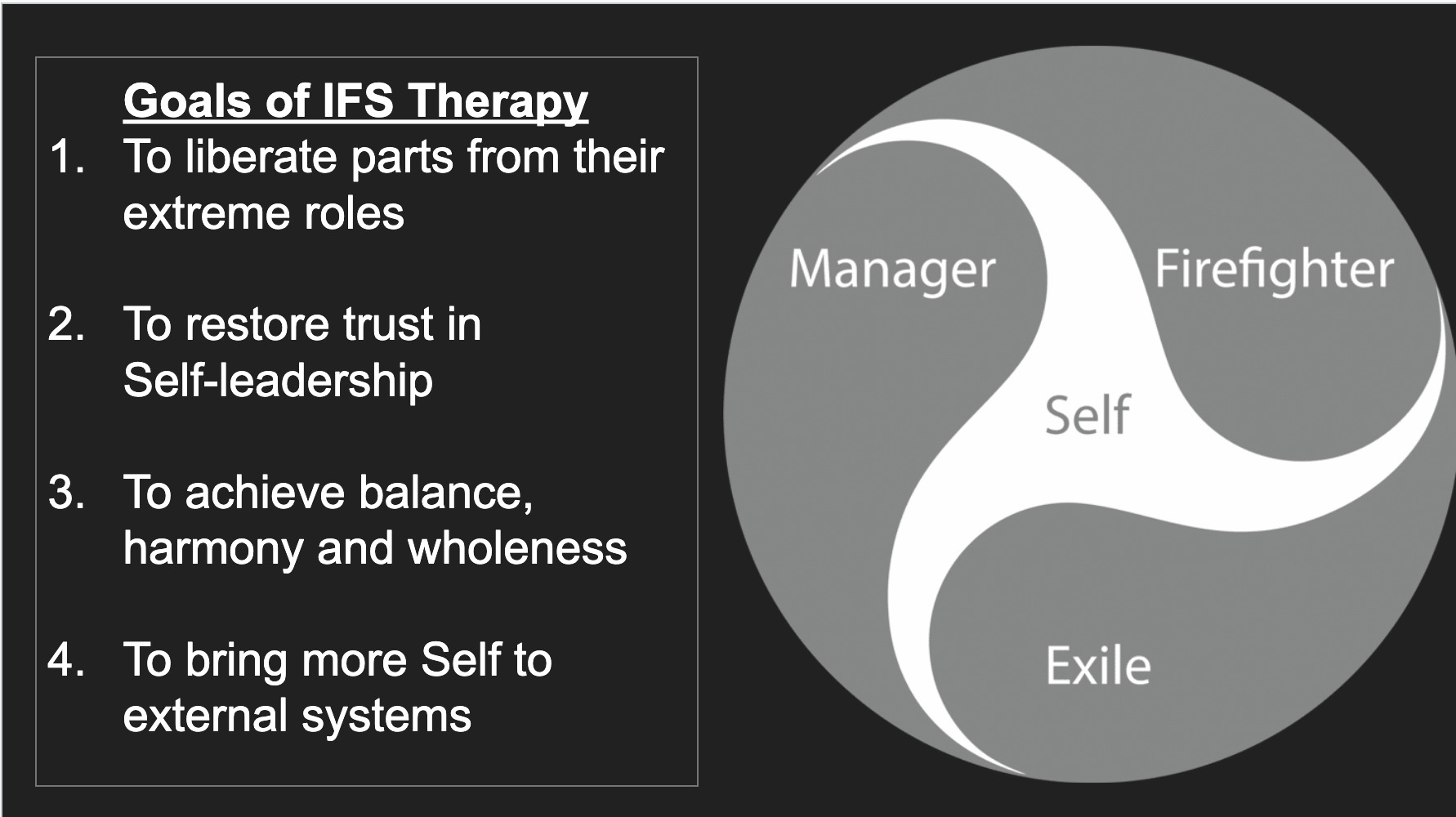
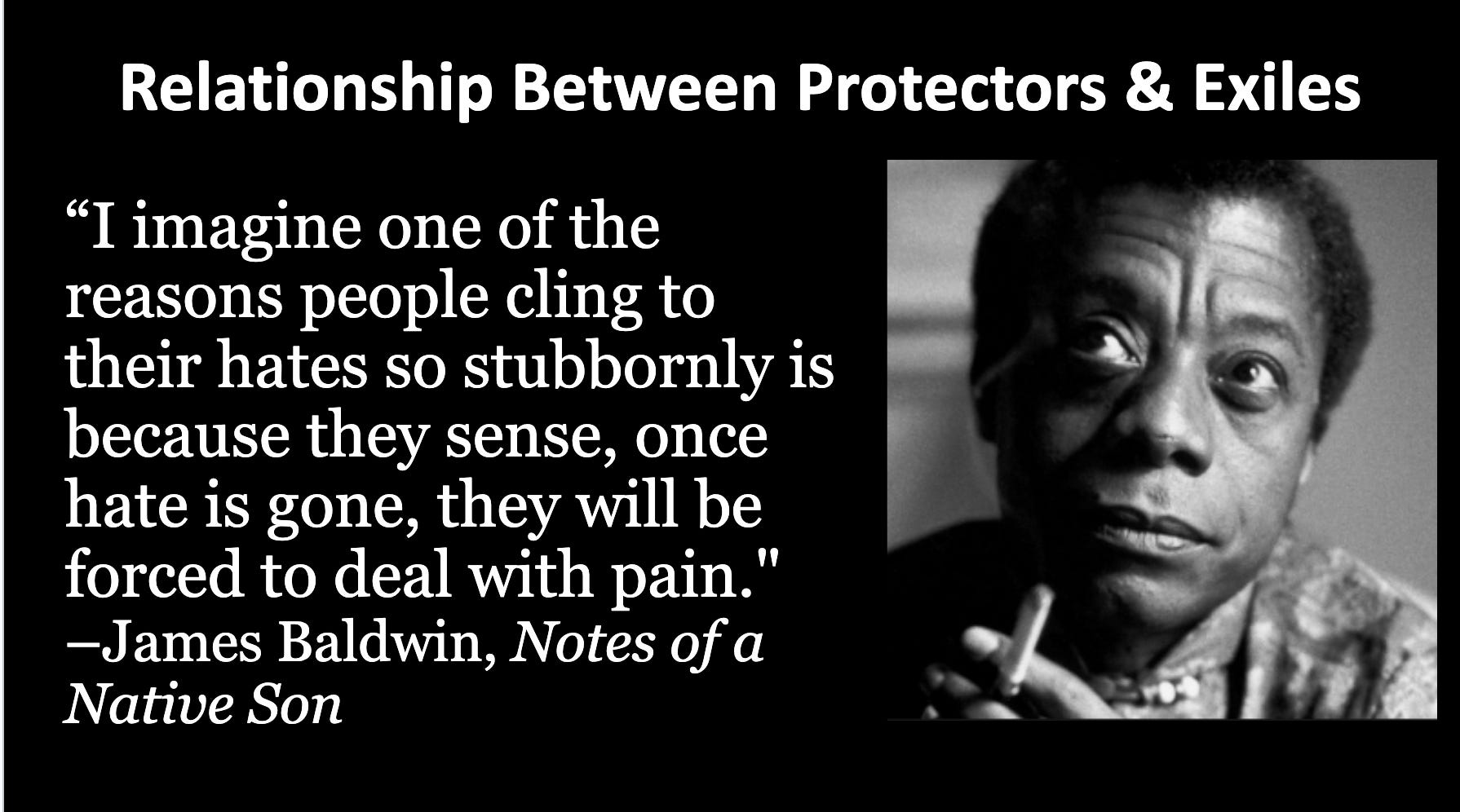
We wove Internal Family Systems through the whole arc of the group -- the idea that we are not a single unified self but a community of parts, each with its own history and logic and fear. Several people had encountered IFS before. But something happened in the context of this group that was different from individual therapy. One participant, herself a therapist who does parts work professionally, said she had forgotten to turn the framework on herself. Being in the group got her to do that. Another said the key insight was that you do not have to be in a spectacular crisis to use IFS. The whole point, she said, is to apply it before it turns.
What I kept watching was the shame piece. Multiple people, independently, named this: when you create a little space between yourself and your parts, when you can say “there is a part of me that does this” rather than “I am this,” the shame loosens. You are not the thing you are afraid of. You contain it. That is different. One person said it made them think differently about conflict with a partner -- not “I really don’t like you” but “I don’t like that part of him.” That is a small linguistic shift with enormous consequences.
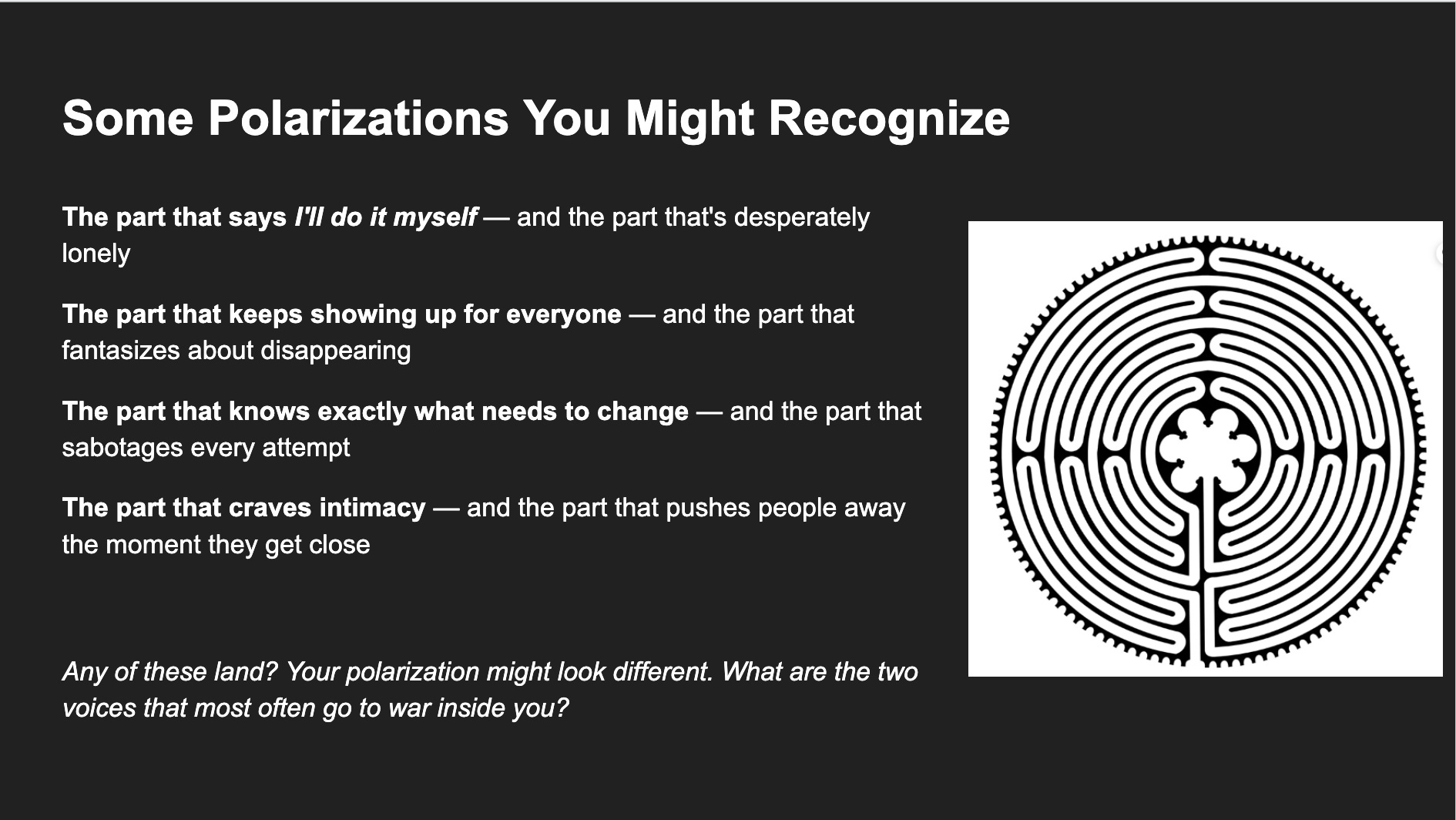
The survey responses after our last session confirmed something I had suspected. Most people said IFS moved too fast. They wanted more time with the model, more examples, more separation between the framework and the mapping process. I heard that. And yet the parts language had already traveled -- into arguments with partners, into conversations with children, into the way people were narrating their own difficult weeks. One person’s daughter had invented a code word. Another person said he catches himself now thinking about which part of someone he doesn’t like, rather than collapsing the whole person into the thing that irritated him. They hadn’t learned IFS. They had acquired a grammar. That turns out to be enough to change what happens next in a room.
The tiered warning signs framework landed with almost everyone. People came back to it again and again. There is something about having a map -- a document that says, here is what tier one looks like, here is tier two, here is what I need at each level -- that changes the stakes. One participant put it clearly: when she is heading into difficulty, she now has something tangible that does not require her to explain herself from scratch every time. It is a bridge. It makes the intensity feel less like a cliff edge and more like terrain she has already walked.
One of the things that moved me most in our closing session was how many people named fragmentation as the wound they were carrying before they arrived. One person put it plainly: she goes to AA and cannot talk about mental illness. She goes to her writing group and cannot talk about recovery. She sits in therapy and cannot talk about community. Everything is siloed. Everything is partial. She found out in our last session that several people in the group are writers and artists. “I kind of missed out.”
T-MAPs is, among other things, an attempt to address that fragmentation. Not by solving it -- I am not that ambitious – but by creating one container where the whole person is allowed to be present. Where the diagnosis and the creativity and the politics and the relationships are not in separate rooms. Where you can talk about your ADHD and your recovery and your family and your inner critic and your hopes for the future all in the same hour.
I have been compensating for ADHD my whole life without a name for it. I got the official diagnosis recently, and sitting with this group helped me understand something about myself I had not fully articulated: I have always organized my life around the physical presence of other people because alone, I spin. I spent years in collective punk houses not because I was ideologically opposed to a regular life but because I literally cannot sustain one without the body-doubling effect of other humans nearby. Several people in the group named this too. The social presence of the group may be doing specific neurological work for a significant subset of participants. That is worth paying attention to in future iterations.
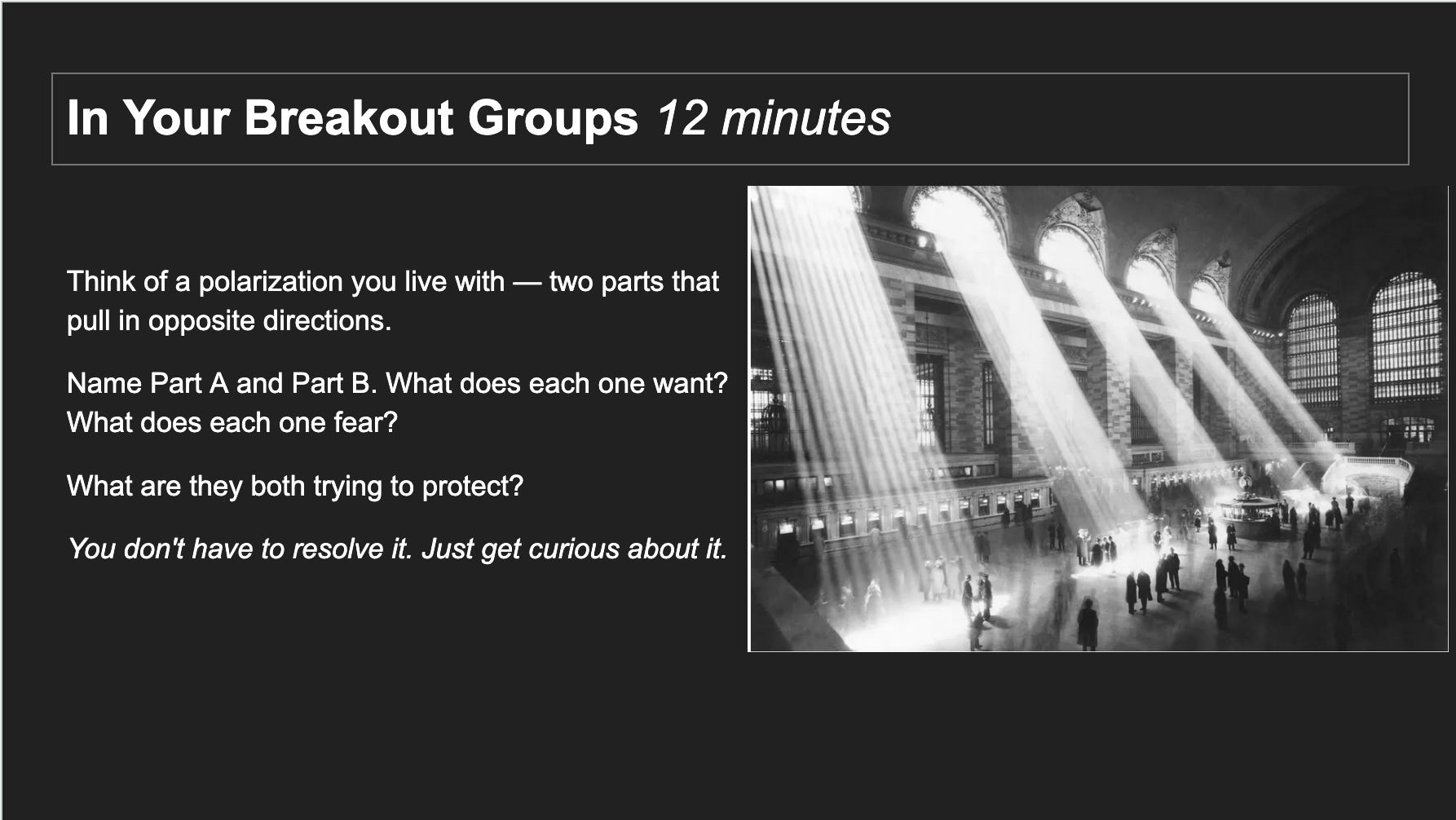
There is a participant quote I keep returning to. She said: “There’s such pressure to become a final, healed, coherent version. I’m just sitting with being unfinished with other people, being messy a little, and appreciating the creativity and curiosity that comes from that.”
Being unfinished with other people. I think that is the thing. That is what this group was doing.
But we can’t ignore the 2026 political context. We are living through a deliberate dismantling -- of public services, of collective memory, of the idea that we owe each other anything at all. The institutions that were supposed to catch people when they fall are being gutted in real time, and the message underneath the policy is older than any particular administration: you are on your own, your suffering is your private problem, and the only legitimate response to pain is individual. That message is a lie. It has always been a lie. And the people in this room knew it, which is part of why they showed up.
This group is a prototype for what resistance to that lie can actually look like. Not as a replacement for care -- that framing is a trap, and the people doing the dismantling would love for us to accept it -- but as an infrastructure for the kind of mutual support that keeps people alive between the crises, and sometimes prevents the crises from happening at all. Collective care is not a consolation prize for the absence of systems. It is its own thing, with its own power. We did it for four weeks. That is worth knowing.
After our last session Helena and I sent a survey. Twenty-nine people responded. I want to share some of what came back, because the responses are part of the record too.
The work traveled. One person wrote that she and her daughters have started using parts language with each other, and that her daughter now says “Momo you are being POINTY” when a reactive part shows up -- which she noted is much easier to hear than “Mom, you’re awful.” Another said he made one small change: when he wakes up in the morning, he does not look at his phone. He feeds the dog, brushes his teeth, makes coffee. He called it insanely gratifying. A third said she was able to give her provider authentic insights she wasn’t sure she could have articulated without the T-MAPs prompts. These are not clinical outcomes. They are people carrying something home.
One person felt the mapping and the parts work were blending together in ways that were hard to track. Someone couldn’t get themselves to do the homework and wasn’t sure why. One person wrote something that stopped me: she felt her problems weren’t severe enough to warrant doing T-MAPs, that she wasn’t deserving of it. She caught herself and added: “feelings of unworthiness is a good trailhead.” That is exactly right, and it is also exactly the kind of thing that gets lost when a group moves quickly. I am holding that for next time.
And then there was the hunger. Twenty-eight out of twenty-nine people said they wanted to stay connected. Almost everyone said yes to a Part 2. People named what they wanted: going deeper on how parts develop, practicing holding space without fixing, returning to the map after a hard episode to see what was learned, bringing parts work into ongoing relationships rather than saving it for crisis. One person wrote that the whole month could honestly be slowed into two separate month-long intensives. Another said what stood out most was not the T-MAP itself but wanting to be connected with others in a group setting. One person asked if there was a way to make a local group happen.
I do not have all the answers yet. But the hunger is data. In a moment when we are being told that we are on our own, twenty-eight out of twenty-nine people said: not yet. Keep going.
What I want to carry forward from this cohort, and what I am asking everyone who was part of it to carry forward too:
The document and the community are not mutually exclusive. One participant said she had a fantasy of an illuminated manuscript -- a beautiful, perfect record of her inner world -- and also realized that what she really needed was the group. She is right that it does not have to be a choice. Pull the document off the shelf. And call someone.
The tier-based thinking works. More than one person said it changed how they understand the early signs of difficulty in themselves. That is the whole point. That is what the maps are for.
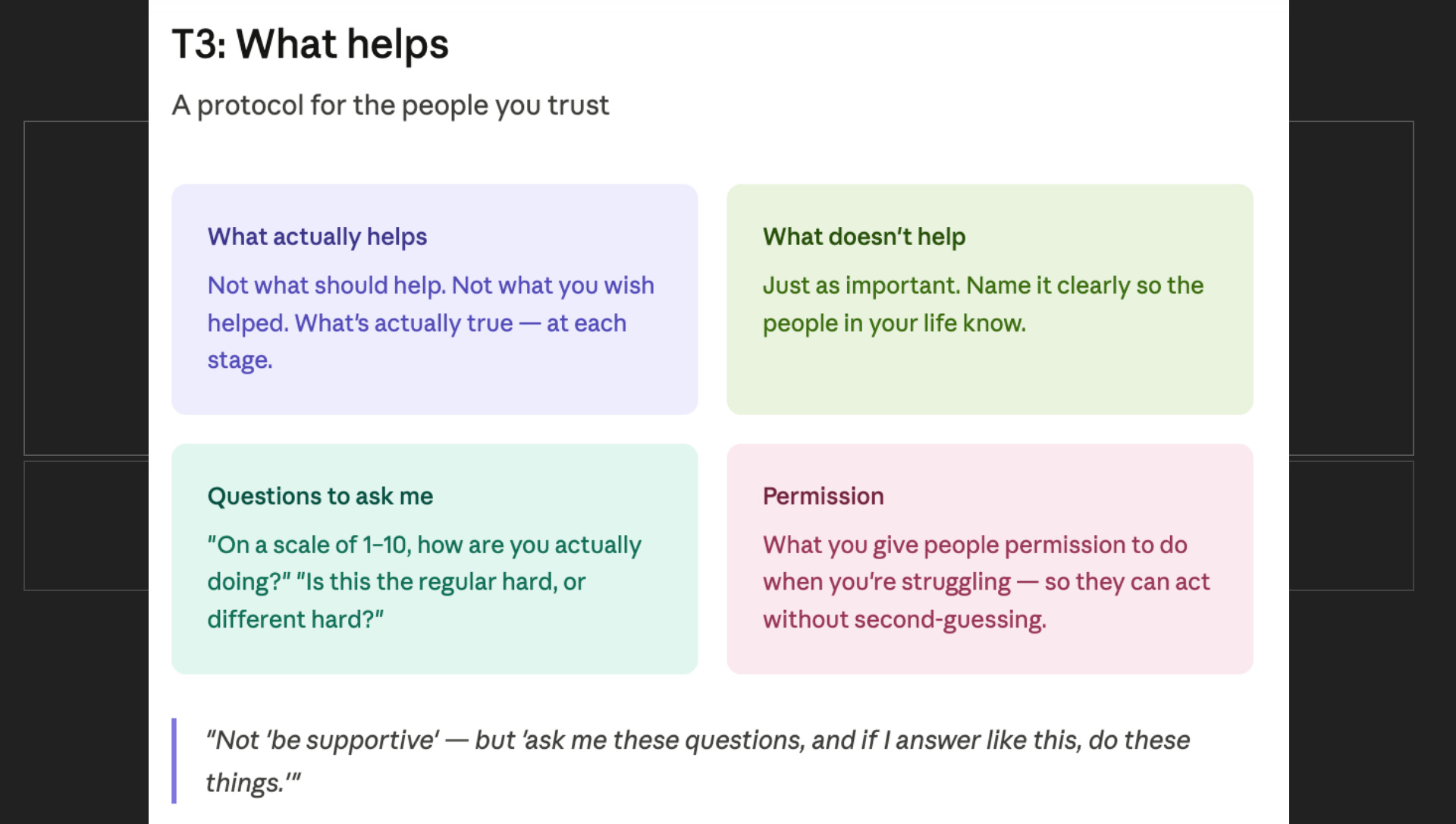
Asking for help is not natural for most people in this room. One person said the idea of sharing what she needs and asking for it from another person felt literally revelatory. Not complicated. Revelatory. That tells me we are starting from a real place of deprivation. We can practice our way out of it.
The stranger effect is real and it is worth protecting. There was something specific about this group being made up of people who mostly did not know each other before. I had a conversation with each of you before I let you in, and I want to name that: it is not an algorithm. It is judgment and intention and care about who is in the room together. That container does not happen by accident.
If you felt connected here, you are allowed to stay connected. I will be reaching out about future cohorts and about what comes next. One of my favorite things in the world is connecting people to each other. If this group taught me anything, it is that I am not alone in needing that.
Thank you for being unfinished with me.

Not only is this framework being co-created is REVELATORY, it is also Revolutionary! I'm a MH survivor clinician and I've been trying to figure out how to bring my clients together. I've already got the Vol. 1 T-MAPs, now to bring in the Vol. 2.
Truly inspiring. Thank you, Sascha!
This is so amazing and beautiful and powerful! Resonates so much❣️ The underground will flourish. We the people are the power! It is all about connection and support and holding safe space. The institutions around us may be dismantled, but we have the power to do this for each other. 💖